
Energy and Extreme Environment Applications using gSKIN®
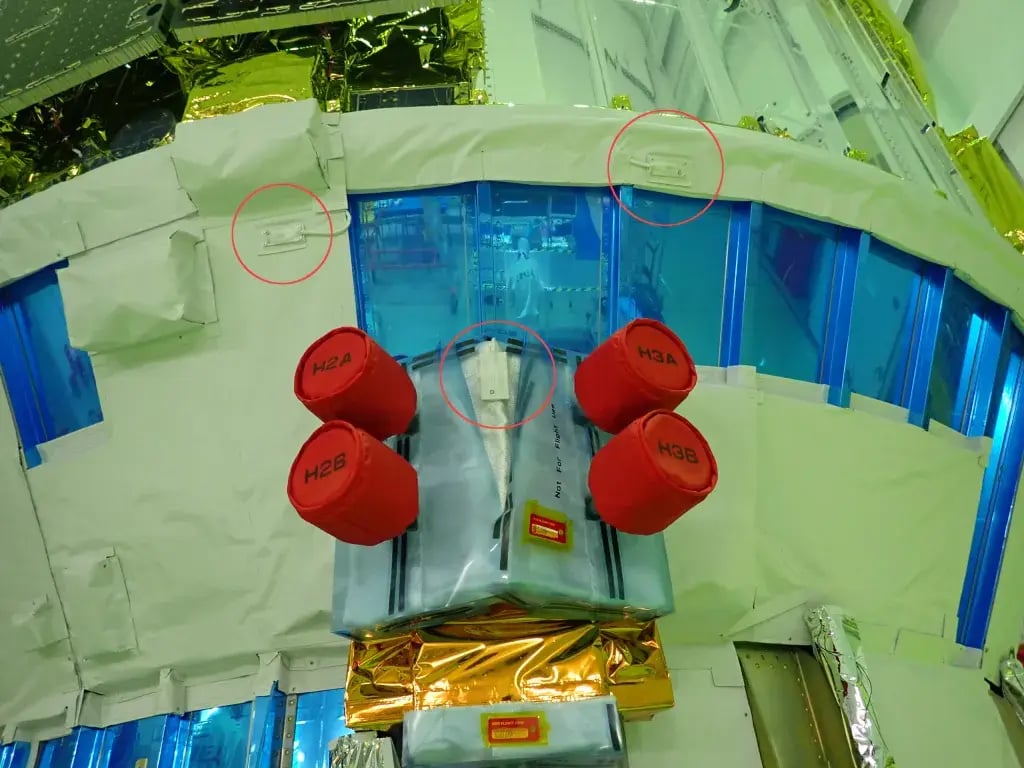
gSKIN® goes to space!
Did you know that our heat flux sensors have been to space? Our heat flux sensing technology can be employed to evaluate cryogenic environments.
Measuring heat flow at cryogenic temperatures is often difficult, as many sensors lose sensitivity in these conditions. gSKIN® sensors are designed to remain robust and reliable, even in extreme environments, making them suitable for use in outer space.
In May 2020, the Japanese Aerospace Exploration Agency launched the HTV-9 unmanned cargo spacecraft to resupply the International Space Station. gSKIN® heat flux sensors were installed on the spacecraft to measure how the propulsion system affected the vehicle's overall structure.
Why choose gSKIN® for extreme environment heat flux measurements?
- High sensitivity for detecting even small heat flow changes.
- Ultra-thin and compact design with minimal impacts on the test setup.
- Easy to apply and integrate into existing systems and experiments.
- Reliable heat flux measurements where standard temperature sensors are not sufficient.
- Robust and durable, suitable for demanding R&D work and harsh testing conditions.
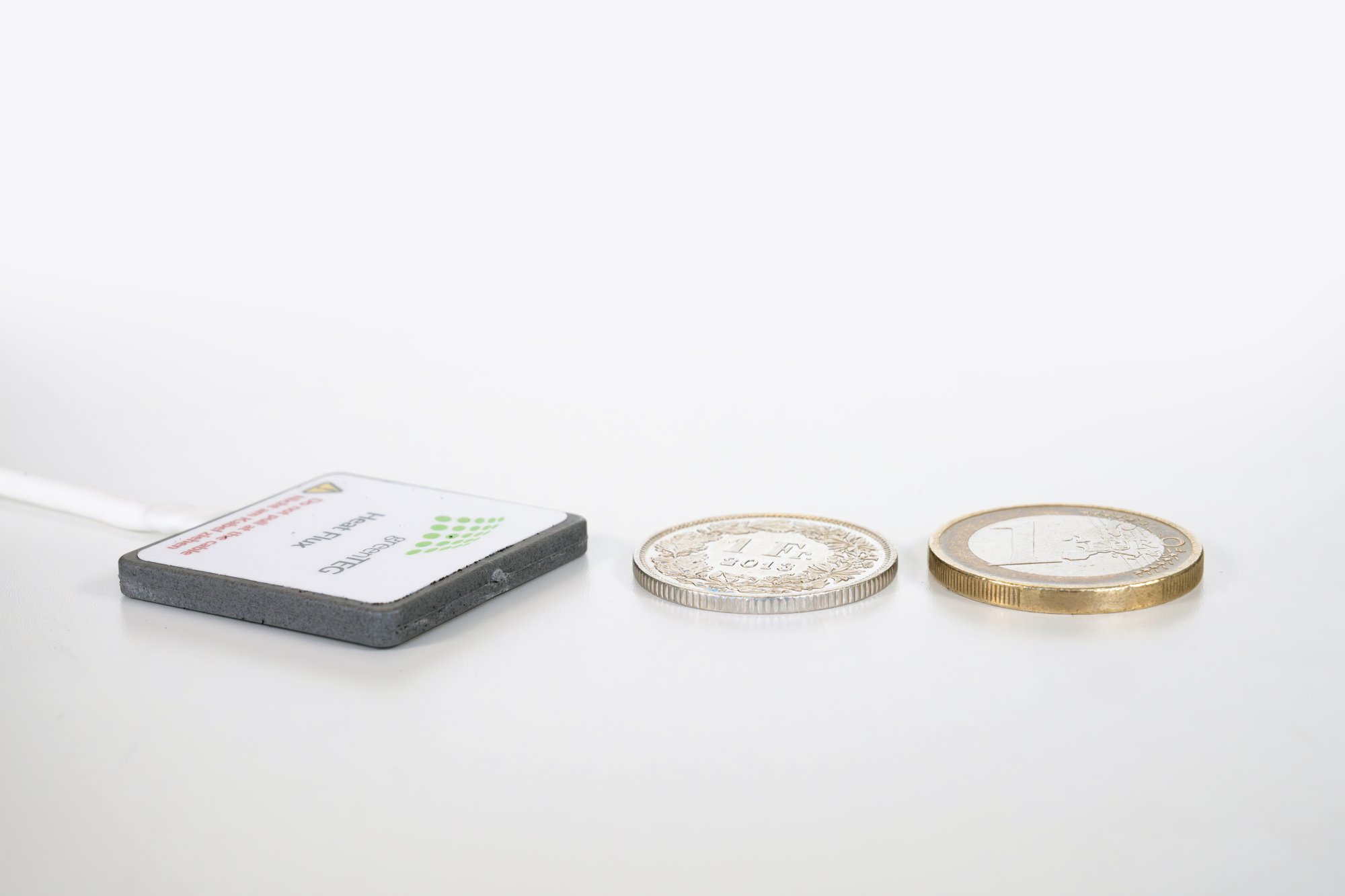

gSKIN® for Solar Radiation Measurements
The performance of a photovoltaic system depends not only on alignment with the sun, but also on how heat builds up and is managed within the panels. Excess heat can reduce efficiency, accelarate aging, and lead to energy losses that are difficult to detect with temperature measurements alone.
gSKIN® heat flux sensors make it possible to measure real heat transfer in photovoltaic panels, providing direct insights into thermal behavior. This allows users to:
- Measure heat losses from panels under real environmental conditions.
- Monitor thermal behavior across the panel surface over time.
- Identify efficiency losses caused by overheating.
- Validate cooling concepts, such as passive or active thermal management.
- Support energy optimization strategies with real heat-flow data.
Explore our gSKIN® heat flux sensors below:
gSKIN®-XM
Best for performing reliable heat flux measurements under controlled conditions.
gSKIN®-XP
Best for balancing both size and sensitivity and providing a reliable compromise.
gSKIN®-XI
Best for measuring very small heat fluxes where precision matters the most.
gSKIN®-XO
Best for determining the heat flux from air into various materials, or vice versa.
Explore some peer-reviewed publications:
"Highly ordered rubbers with a giant elastocaloric effect." (2026).
Authors: Yuheng Fu, Shixian Zhang, Borui Li, Lijia Wang, Yibo Zhang, Zhiwei Ye, Youshuang Zhou, Juan Yi, Hongmei Qin, Qiu Shi, Quanling Yang, Shan Wang, Chuanxi Xiong, Shuai Nie, and Qing Wang
Read More!"On the influence of the storage wall thickness on the parasitic near-wall flow and exergy destruction in stratified thermal energy storages." (2026).
Authors: Hannes Ribitza, Clemens Naumann, Christian Cierpka
Read More!"Vanadium dioxide radiative thermal transistor achieves hundredfold amplification of far-field heat current." (2025).
Authors: I. Alonzo-Zapata, C. Champeaux, F. Enguehard, J. Ordonez-Miranda, F. Dumas-Bouchiat
Read More!"Month-by-month prioritization of heating and ventilation from an adaptive mechanically-ventilated double-skin façade." (2025).
Authors: H. Alkhatib, N. O’Neill, B. Norton
Read More!Explore our other gSKIN® application areas.
Explore our further application areas, including battery calorimetry, calorimetry, material characteristics and heat transfer measurements.
Are you looking for more information on our heat flux sensors?
Explore our FAQ Page to discover the answers to our most commonly asked questions.
Still didn't find what you were looking for? Press the "Contact Us" button below, fill out the contact form, and a member of our team will get back to you shortly.